Role
Founder, Product Design, UX/UI
Timeline
2025 – Present
Early-stage Mobile Product
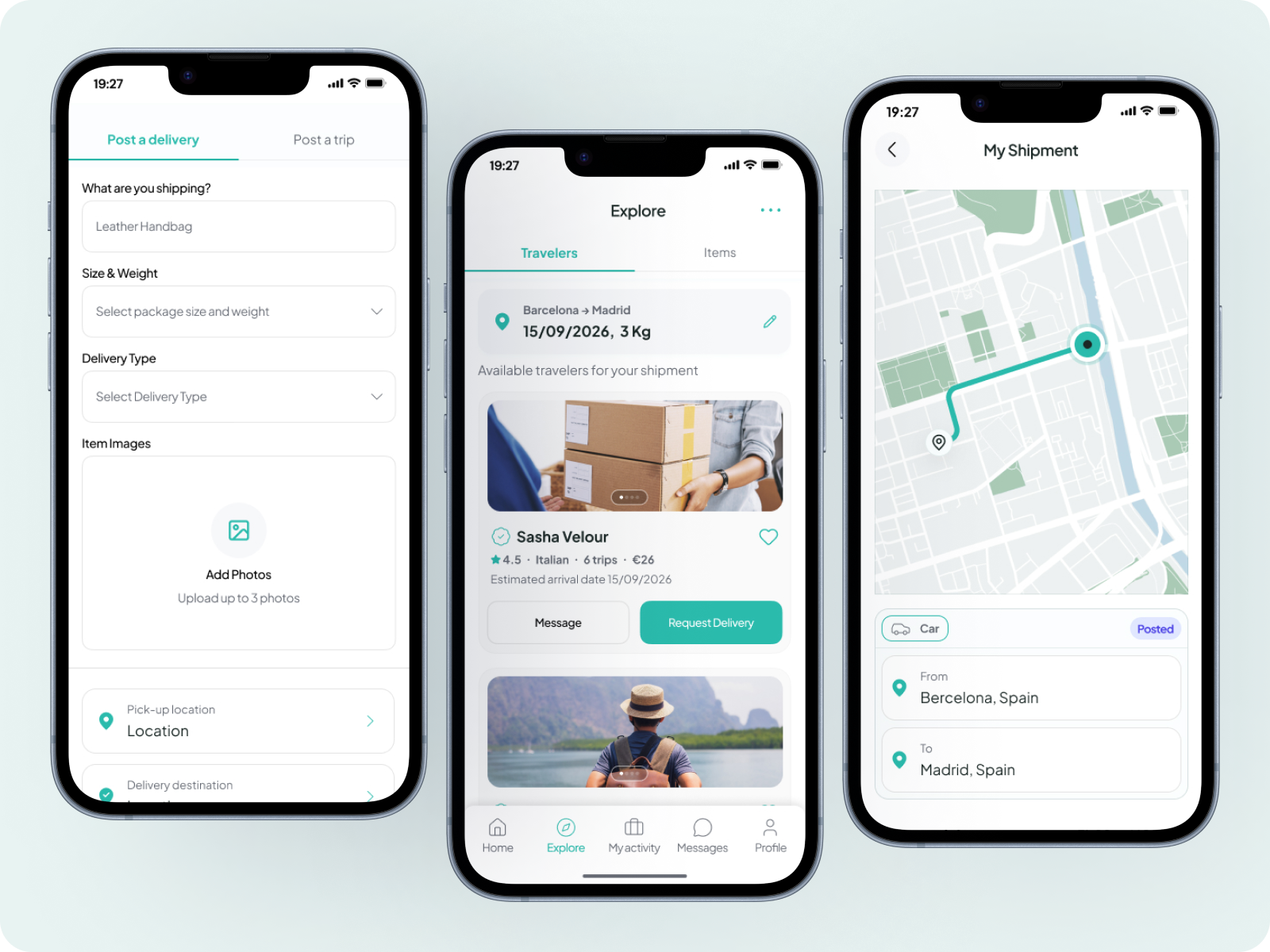
Designing an early-stage mobile product that makes item delivery more flexible, intuitive, and user-friendly.
The goal is to rethink how people coordinate deliveries through a trust-based, mobile-first experience that feels simpler than traditional shipping.
THE CHALLENGE
Designing trust and simplicity into a complex real-world flow.
Traditional shipping can often feel expensive, slow, and inflexible for everyday needs — especially when users want a more convenient way to move items between cities.
The challenge was to design a mobile-first experience that makes delivery coordination feel simple, while solving for trust, communication, pricing clarity, and real-world logistics between two people.
Because the product involves strangers, handoffs, and payment timing, the experience needed to feel intuitive and guided without overwhelming users with complexity.
DESIGN PROCESS
01. Product Framing & User Flow Definition
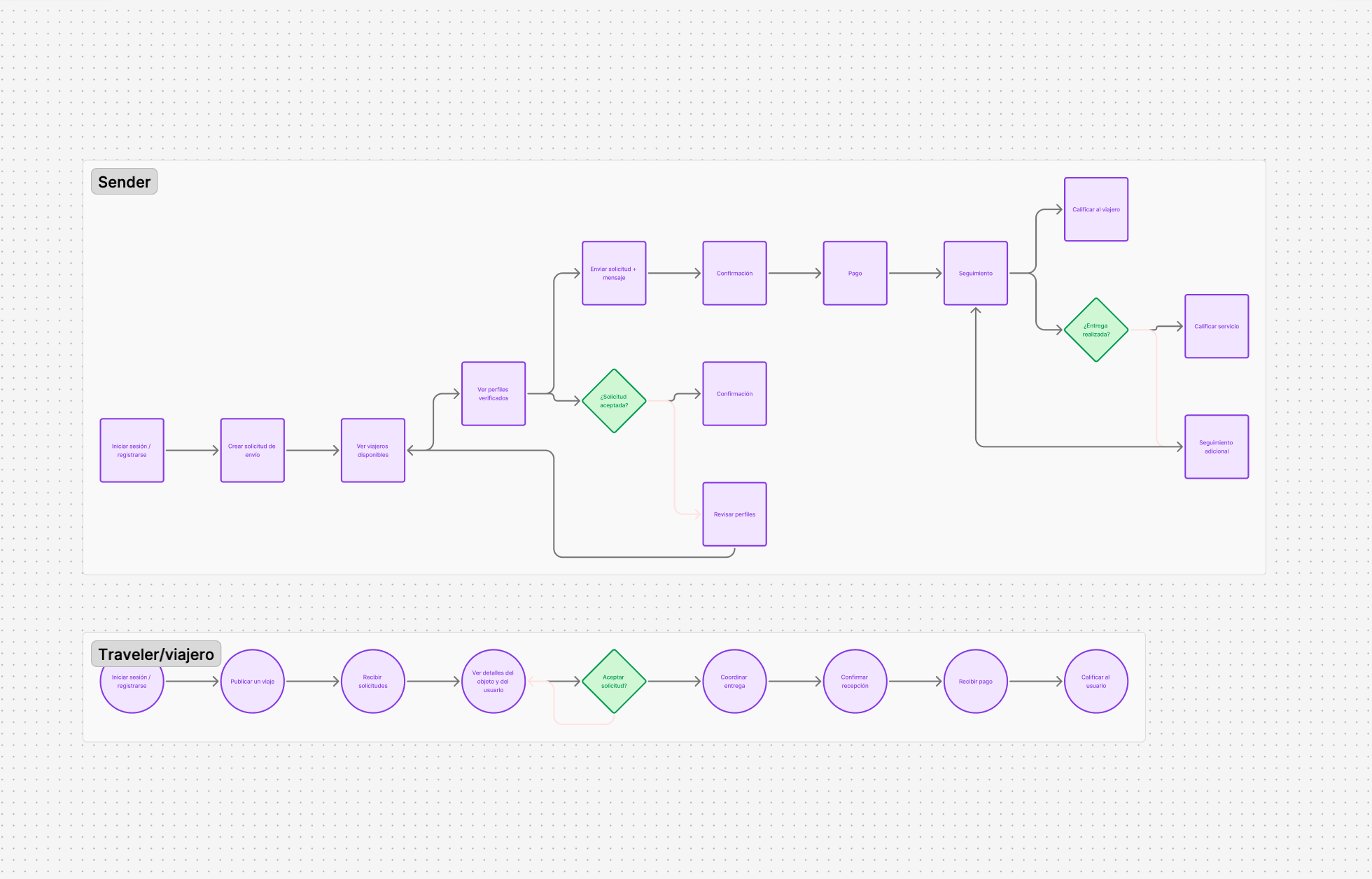
As both founder and designer, I began by defining the core product logic before moving into UI. The first priority was understanding the two-sided marketplace flow and simplifying it into clear user journeys.
I mapped the main interactions for both sides of the experience:
- users who need to send an item
- users already traveling who can help deliver it
This phase focused on identifying friction points around trust, booking clarity, delivery coordination, and payment release.
User Flows
Feature Definition
Marketplace Logic
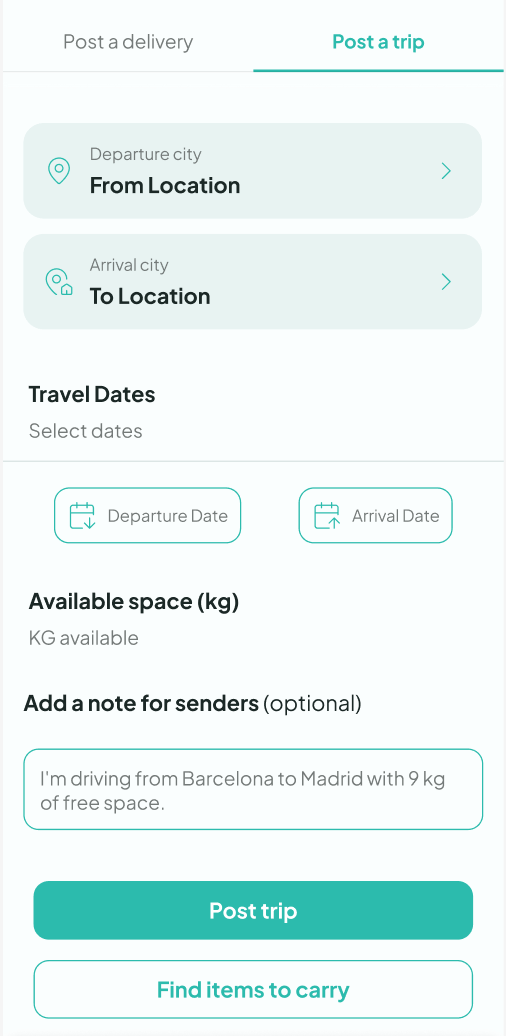
MID-FI
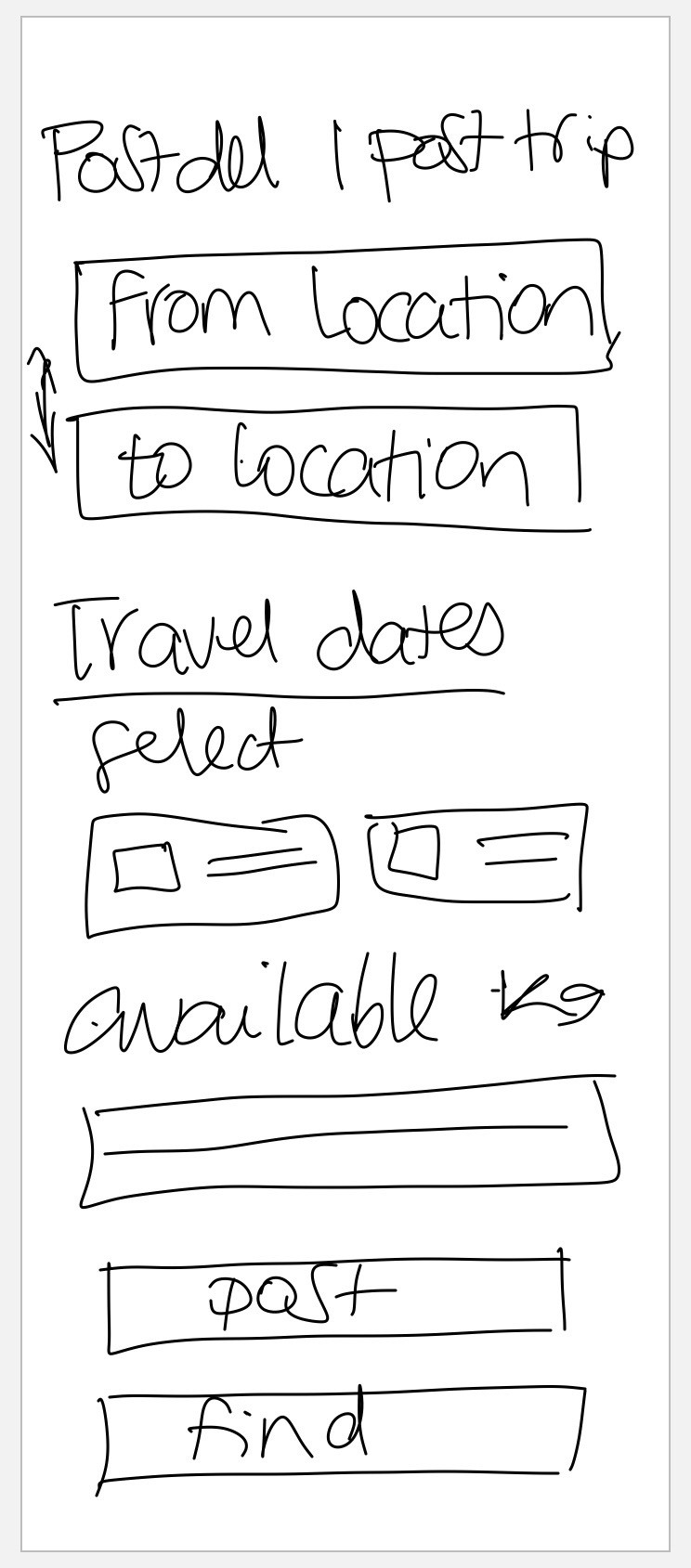
LO-FI
02. Wireframing the Core Marketplace Experience
Once the product logic was clear, I translated the main journeys into wireframes focused on reducing friction and helping users understand what to do next at each step.
The goal was to keep the experience lightweight and mobile-friendly while supporting more complex actions like:
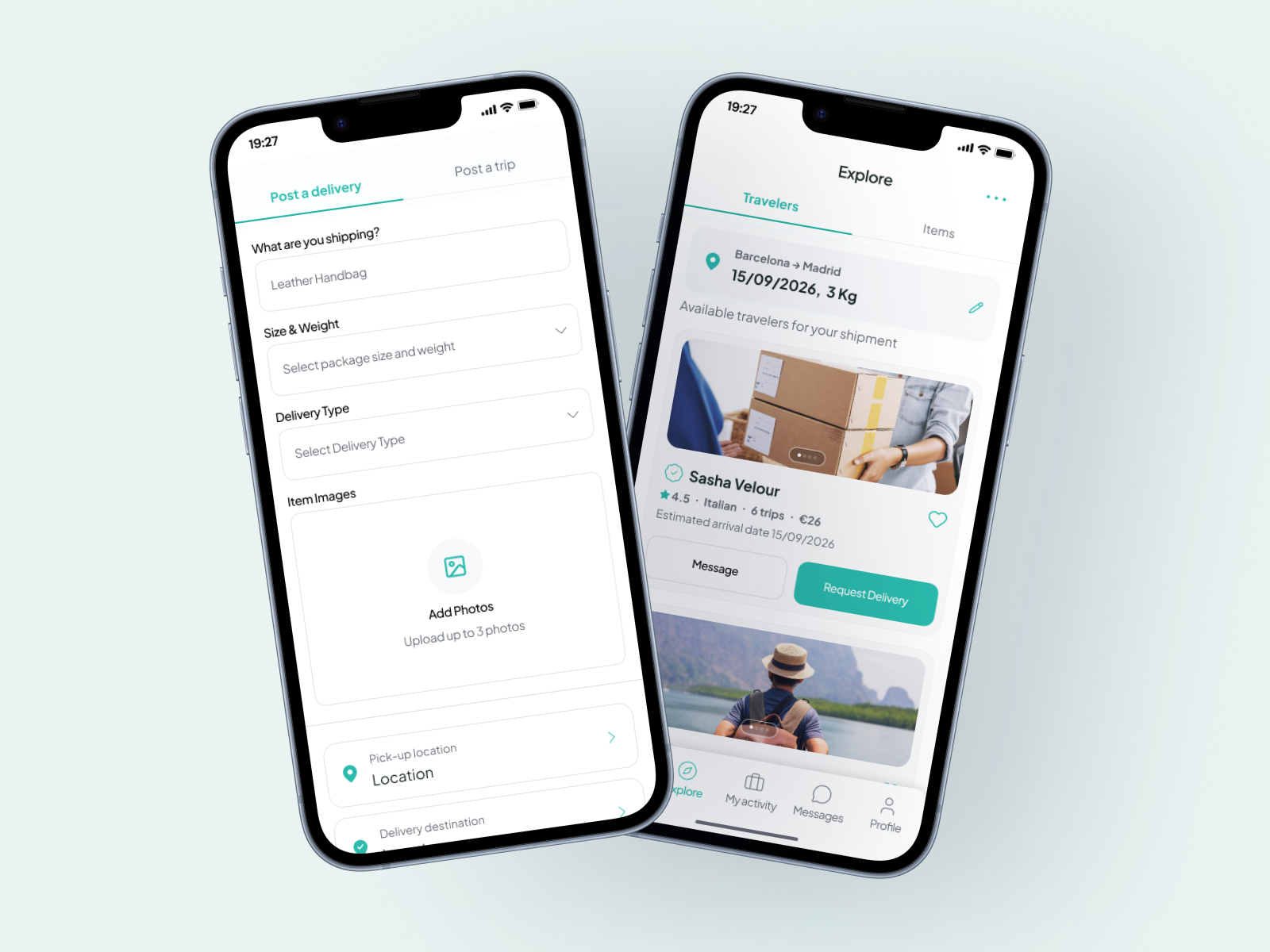
- browsing available travelers
- posting a delivery request
- comparing pricing
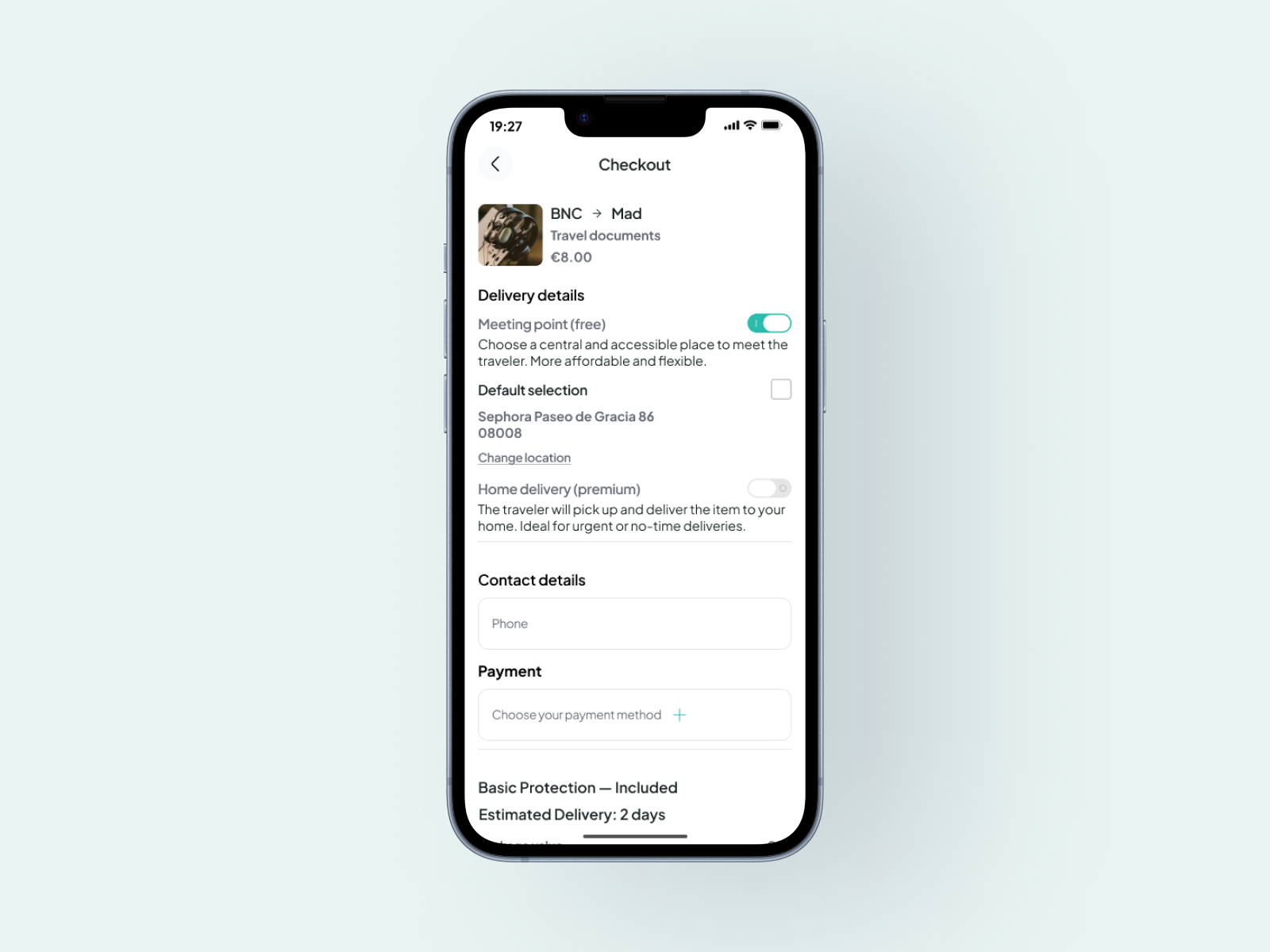
- confirming delivery details
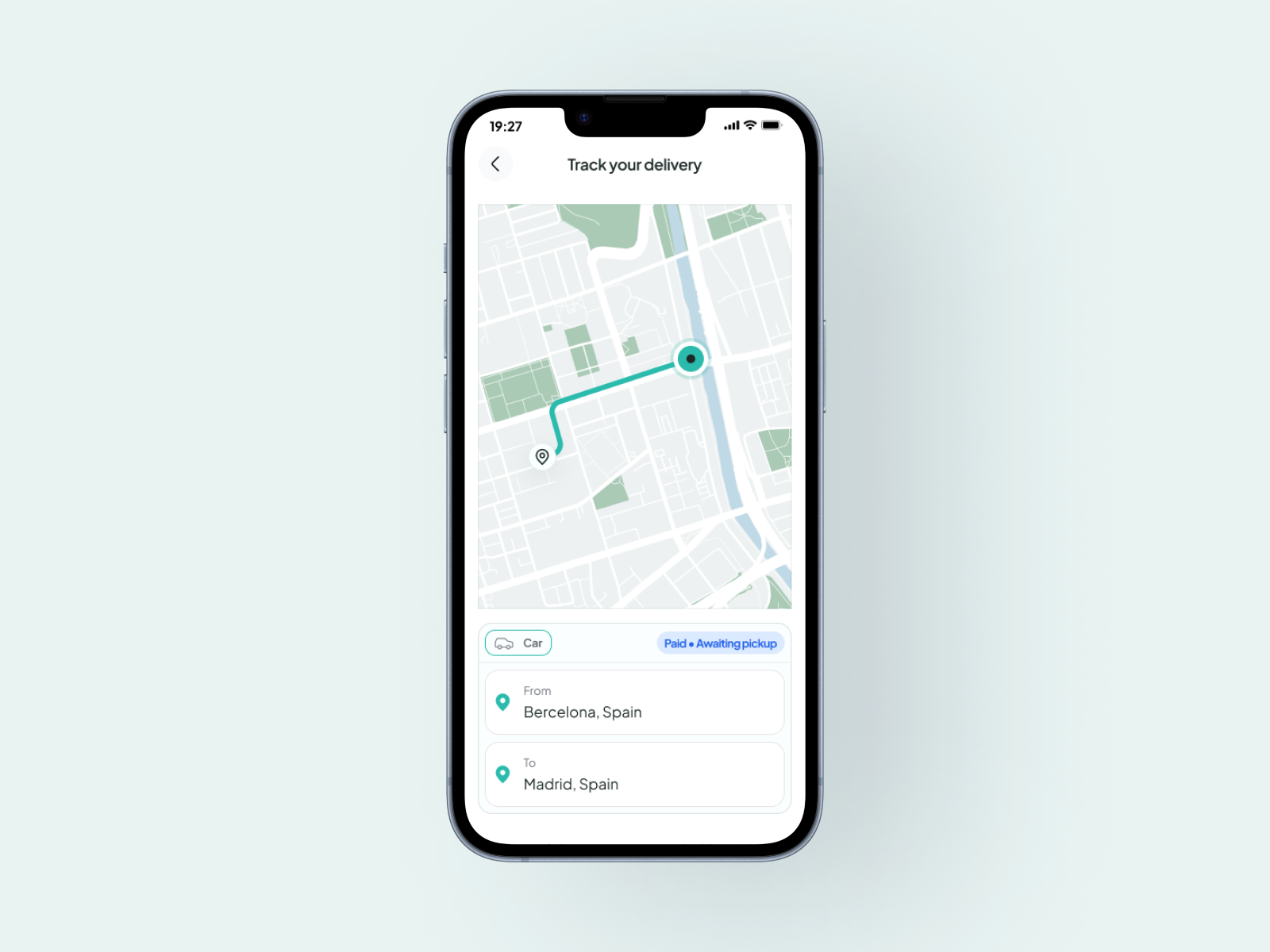
- tracking order status
03. High-Fidelity Prototyping & System Design
The final UI direction focused on clarity, trust, and ease of use.
I built a scalable mobile design system in Figma to keep the experience consistent across key flows such as search, booking, checkout, messaging, and tracking.
Special attention was given to:
- trust indicators
- pricing transparency
- status clarity
- simple calls to action
- a marketplace experience that feels approachable rather than overwhelming
The Outcome
A stronger product vision, ready for development.
This project resulted in a complete high-fidelity product prototype covering the main marketplace flows for both sides of the experience.
By the end of the design phase, I had defined the core product architecture, key user journeys, and a scalable visual system ready for developer handoff.
Beyond the interface itself, this project strengthened my ability to design beyond individual screens — thinking through product logic, trust systems, edge cases, and real-world user behavior in a marketplace environment.
Ready for
developer handoff
End-to-end
prototype designed
2-sided
marketplace flow defined

Next project:
Vendor Management Tool
